

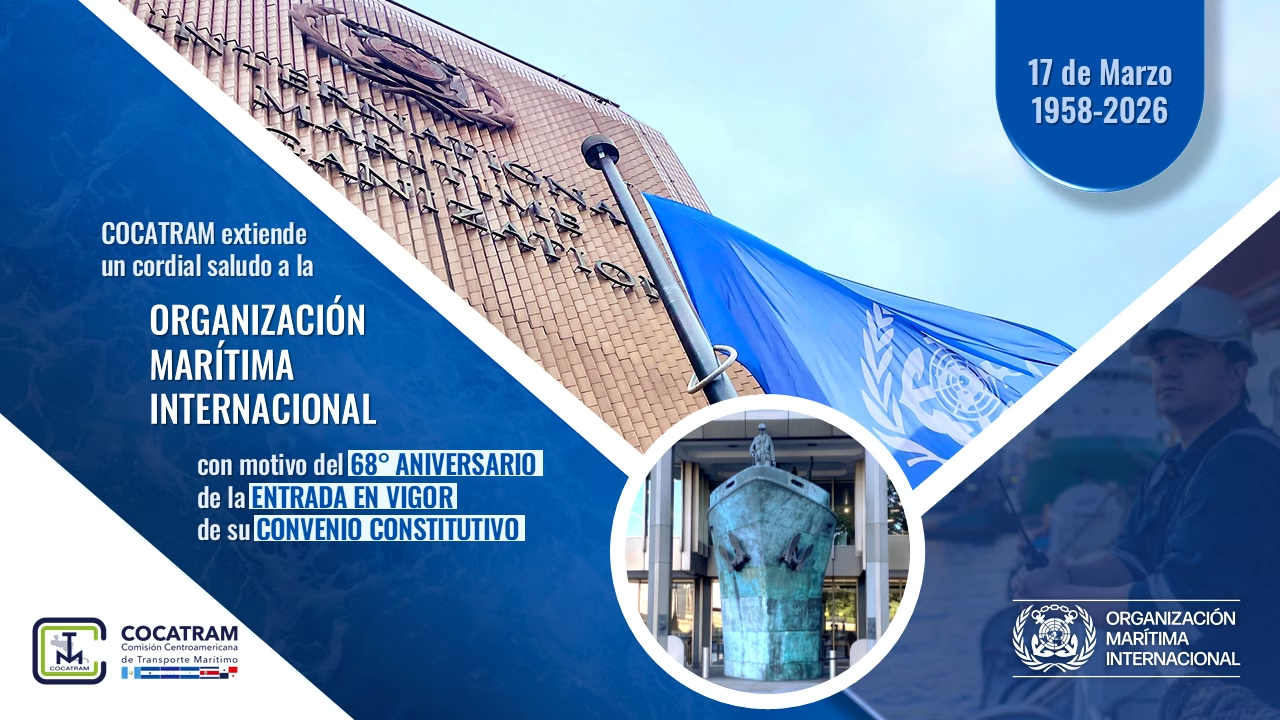
Today, March 17, the International Maritime Organization (IMO) commemorates another anniversary of the entry into force of its Convention, an instrument that, since 1958, formally marked the beginning of the work of this specialized United Nations agency responsible for establishing the regulatory framework for international maritime transport.
The Convention was originally adopted on March 6, 1948, during the United Nations Maritime Conference held in Geneva, laying the foundations for global cooperation aimed at strengthening navigation safety, preventing marine pollution, and promoting an efficient and sustainable international maritime system. Following its entry into force in 1958, the organization held its first meeting in January 1959, beginning a trajectory that, over the decades, would consolidate its role as the regulatory authority of the global maritime sector.
Initially known as the Intergovernmental Maritime Consultative Organization (IMCO), the organization officially adopted its current name in 1982, reflecting the evolution and expansion of its functions in a context of increasing interdependence in global maritime trade.
Over nearly eight decades since the adoption of its founding Convention and more than six decades of effective operation, the IMO has developed a robust international legal framework composed of more than 50 conventions and numerous technical instruments, aimed at ensuring maritime safety, protecting the marine environment, and enhancing the operational efficiency of maritime transport.
Among these instruments, three stand out as part of the four fundamental pillars that underpin the regulatory system of international maritime transport:
- SOLAS Convention, considered the most important treaty concerning the safety of life at sea, which establishes technical standards for the construction, equipment, and operation of ships.
- MARPOL Convention, the main international instrument for the prevention of marine pollution caused by ships.
- STCW Convention, which defines global standards for the training, certification, and watchkeeping of seafarers.
These conventions have been essential in raising safety and sustainability standards in international maritime transport, helping to eliminate so-called substandard ships and promoting fair competition conditions in the global maritime industry.
As a specialized agency of the United Nations system, the IMO’s mission is to promote safe, environmentally sound, efficient, and sustainable maritime transport through the adoption of rigorous international standards and cooperation among States to ensure their uniform implementation worldwide.
In this context, international collaboration is a key element in translating regulatory frameworks into concrete results. At the regional level, the Central American Maritime Transport Commission (COCATRAM) maintains a close cooperative relationship with the IMO, supported by a Memorandum of Understanding that has enabled the promotion of various institutional and technical strengthening initiatives in Central America.
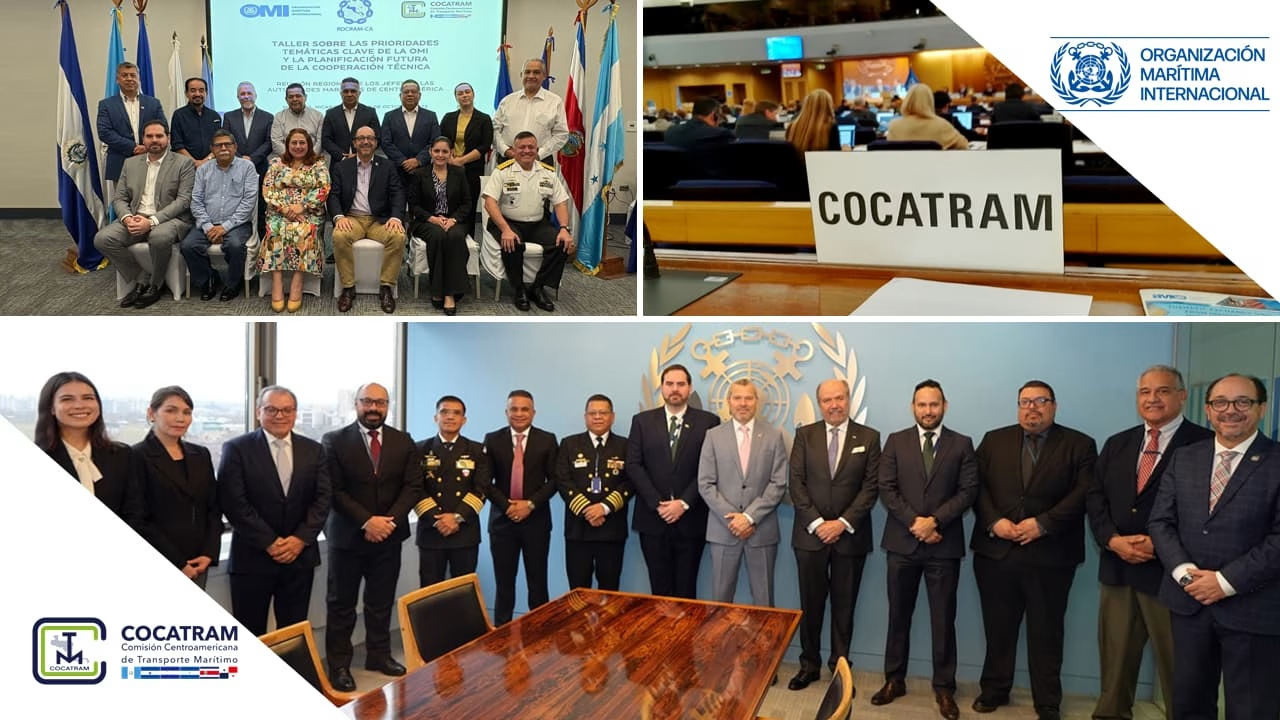
Through the IMO’s Integrated Technical Cooperation Programme (ITCP) and under the “Thematic Programmes” modality, activities have been carried out to support the Member States of the Regional Operational Network of Maritime Authorities of Central America (ROCRAM-CA) in key areas such as marine environmental protection, implementation of the MARPOL Convention, development of Maritime Single Windows within the framework of the FAL Convention, and training in Port State Control (PSC), among other initiatives aimed at strengthening regional maritime governance.
These collaborative efforts developed in recent years are particularly significant, as they align closely with the current World Maritime Day theme: “From Policy to Practice: Driving Maritime Excellence,” which will guide the years 2026 and 2027. Through this theme, the IMO calls for strengthening the effective implementation of the international instruments governing maritime transport. The focus emphasizes moving from regulatory adoption to practical application, ensuring that international commitments translate into concrete actions, measurable results, and tangible improvements in safety, environmental protection, and operational efficiency.
Finally, the Central American Maritime Transport Commission (COCATRAM) extends its warm regards to the International Maritime Organization on this significant occasion, recognizing its sustained leadership in strengthening the regulatory framework of global maritime transport.
Likewise, we express our firm commitment to continue working jointly with the IMO and with the Maritime Authorities of the Region to promote the proper implementation of international instruments, strengthen institutional capacities, and contribute to the development of increasingly safe, efficient, and sustainable maritime transport in Central America and around the world.
